


My Talking Tom 2: Pet Game
Outfit7 Limited
My first few minutes with My Talking Tom 2 gave me a clear idea of its appeal: it is a friendly, colorful pet game designed to turn small moments of attention into a steady routine. I look after Tom, play short activities, move through different worlds, and return later to see what needs doing. It feels less like a game I sit down to conquer and more like a cheerful companion I check during spare time.
That distinction matters. This is a casual game from Outfit7 Limited, and its strongest quality is accessibility rather than depth. The controls are easy to understand, the presentation is bright without being difficult to read, and the overall mood stays light. I can hand it to a younger player without needing to explain a complicated control scheme, while adults may still enjoy it as a brief distraction.
The game is free to start and suitable for Everyone, which fits its gentle tone. It has been available since November 6, 2018, and works on devices running Android 6.0 or later. Its huge audience—over one billion installs and around 6.7 million ratings—also tells me that the basic idea has broad reach, although popularity alone does not make it the right choice for every player.
Related News

QuizzLand Mastery: Strategies for Trivia Triumph

Threads in Real Life: Who Should Join, Lurk, or Leave
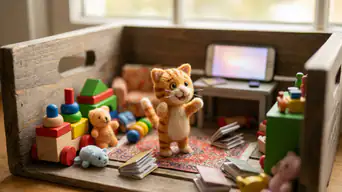
Why My Talking Tom 2: Pet Game is Addictively Fun
A cheerful pet routine that works best in short visits
The first impression: immediate, simple, and deliberately friendly
What I noticed first was how quickly the game communicates its purpose. Tom is the center of attention, and the interface keeps the important interactions close at hand. I do not have to study a long tutorial or learn a complex set of rules before getting involved. The opening experience is built around observing Tom, responding to him, and discovering what else the game offers.
That simplicity is a real strength for children and for anyone who wants a low-pressure mobile game. The visual language uses expressive character animation and clear objects rather than dense menus. Even when I am only playing for a few minutes, the game gives me a recognizable reason to stay: care for Tom, try a mini-game, or look around another setting.
Related News

Why WhatsApp Messenger Still Makes Everyday Communication Feel Easy

Jurassic World: The Game Is the Better Dino Tycoon for Strategic Players

How SHEIN Turned Shopping Into an Endless Content Feed

How to Make Fortnite Feel Smarter on Mobile

Should You Switch to Microsoft Outlook on Mobile?

Why Gallery Keeps Pulling Users Back
At the same time, the first impression also reveals the main limitation. Players looking for a demanding challenge, a detailed story, or a competitive system may find the experience shallow. The game is not trying to replace a large adventure or a deep simulation. Its pleasure comes from repetition with small variations, and that can become predictable if I expect constant novelty.
I found it most enjoyable when I treated each visit as a small break rather than a long session. A quick check while waiting for an appointment, a few mini-games after school, or a relaxed moment before bed suits the design better than an uninterrupted marathon. The pacing feels intentionally soft, so forcing it into a high-intensity gaming session makes its slower structure more noticeable.
The world language: bright spaces that explain themselves
The art direction gives the game a consistent, toy-like identity. Colors are strong, shapes are rounded, and Tom’s reactions carry much of the emotional communication. Instead of relying on long explanations, the game shows me what is interactive through familiar visual signals. That makes exploration approachable, especially for younger players who may not want to read extensive instructions.
Gallery
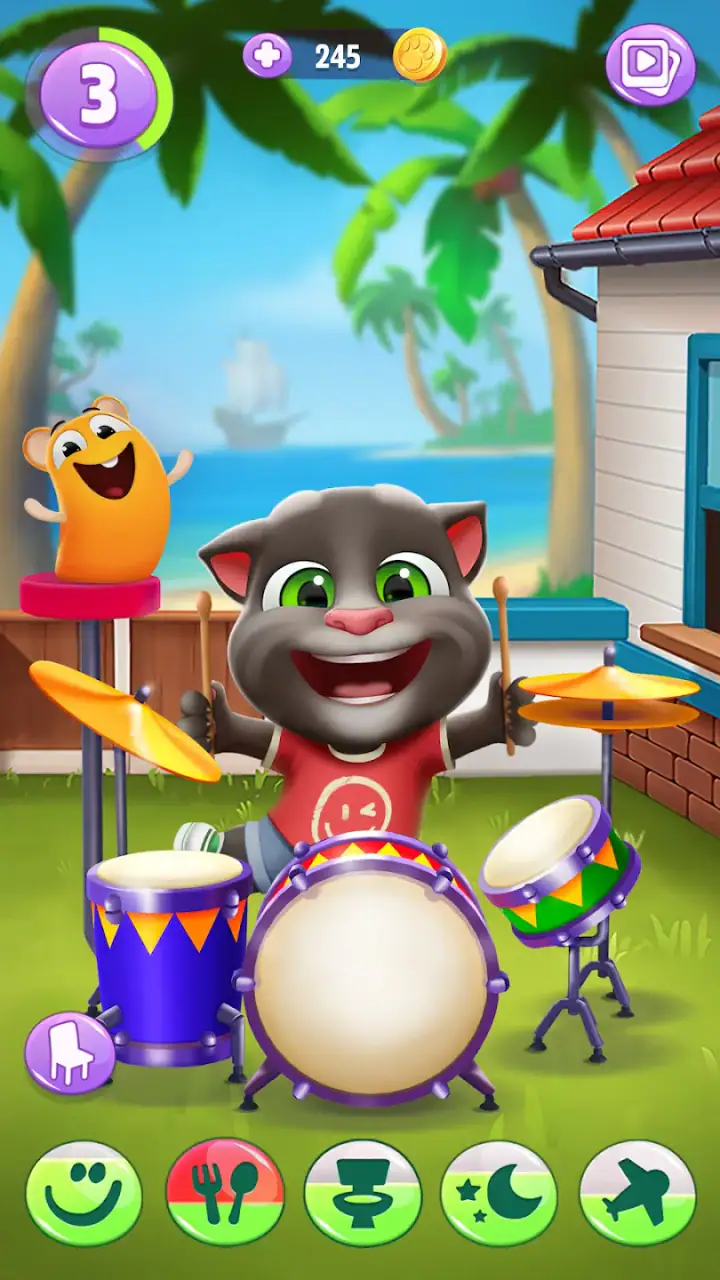
Moving through different worlds adds variety without abandoning the central mood. Each change of setting feels like a reason to look around, but the environments remain easy to understand. I never felt that the scenery was competing with Tom for attention. The locations function as playful backdrops and activity spaces, keeping the focus on the pet relationship while preventing the experience from feeling stuck in one room.
One subtle success is the way the setting supports the game’s emotional scale. Nothing feels threatening or overly dramatic. The world is designed to make ordinary interactions feel rewarding, whether I am checking on Tom or trying something new. That makes it a comfortable choice for players who prefer wholesome, uncomplicated entertainment.
There is also a trade-off in this visual clarity. Because the world communicates through broad, readable ideas, it does not offer the layered environmental storytelling I would expect from a story-driven adventure. I am exploring for interaction and mood rather than uncovering a complex fictional history. If I want a game where every location hides lore or mechanical secrets, a traditional adventure would suit me better.
I also recommend paying attention to how the game’s visual cues guide younger players. Rather than tapping everywhere at random, it is more useful to watch Tom’s reactions and the way the interface presents available activities. This turns the experience into a gentle lesson in cause and effect: choose an interaction, observe the response, then decide whether to continue or move on.
Sound and rhythm: a soft loop instead of constant excitement
The sound design supports the same friendly atmosphere as the artwork. Character reactions, playful effects, and the general audio tone make Tom feel active even when the player is doing something very simple. I found that the sound helps bridge the gap between a static virtual pet and a more responsive companion. The game feels warmer when I listen rather than treating it as a silent collection of buttons.
Its rhythm is especially important. The experience alternates between care, short diversions, and exploration instead of pushing me through a single escalating challenge. That structure gives the game a natural stop-and-start quality. I can finish a small activity and put the phone down without feeling that I have abandoned a long mission.
This is useful in everyday situations. If I have only a few minutes on a commute or while waiting for food, I can open the game, interact with Tom, and leave without needing to remember a complicated objective. The same rhythm can work well for a child who benefits from short, clearly bounded activities rather than an endless competitive match.
However, calm pacing can feel slow when I am in the mood for action. The game does not constantly raise the stakes, and the audio atmosphere reinforces that relaxed approach. Players who prefer rapid rounds, intense music, or precise timing may find the mood too gentle. I would choose a dedicated arcade game instead when I want immediate pressure and a stronger sense of performance.
A practical tip is to use the audio as part of the decision about where and when to play. The reactions make the game more engaging in a quiet room, but they may become distracting in public or around sleeping family members. Muting the device changes the feel because some of Tom’s personality comes through sound, so this is one of those games where the setting around me affects how much charm I notice.
The mechanical fit: care, mini-games, and exploration working together
The core mechanics fit the casual category well. Caring for Tom gives the game a familiar routine, while mini-games provide a change of pace when I want something more active. Exploration adds a sense of movement between those interactions. None of these parts overwhelms the others, and that balance keeps the game understandable from the beginning.
What I like is that the mechanics serve the mood instead of fighting it. The pet element encourages attention, the mini-games prevent the routine from becoming completely static, and the worlds give the player somewhere else to go. The result is broader than a simple digital pet, but still much lighter than a full role-playing game or platform adventure.
The mini-games are most useful as palate cleansers. I do not approach them expecting a deep skill tree or a serious competitive ranking system. I play them because they give my visit a different texture. If Tom’s care loop starts to feel repetitive, switching activities can restore interest for a while.
That also explains the game’s likely lifespan. It can remain part of a daily routine for players who enjoy repetition, character reactions, and gradual discovery. It is less convincing for someone who needs a steady stream of new mechanics. I would not recommend it as a single game for a player who wants a campaign with a clear ending, increasingly complex strategy, or demanding mastery.
The free entry point makes experimentation easy, but the optional purchase system deserves attention. Items are offered through in-app purchases ranging from under one dollar to nearly one hundred dollars per item. I would set purchase controls before giving the game to a child and make sure the player understands that free access does not mean every optional item is free. That is not a criticism of the pet concept itself, but it is an important part of using the game responsibly.
I also think the best way to approach progression is to avoid treating every available item or activity as something that must be collected immediately. The game is more relaxing when I choose a small goal for each visit, such as spending time with Tom or trying a different activity, rather than turning the whole experience into a shopping checklist. This keeps the focus on interaction and helps the free version feel less pressured.
Who will enjoy it, and who should choose something else?
I would recommend this game to children who like animated pets, families looking for a gentle mobile distraction, and adults who enjoy checking in on a character without committing to a long session. It is also a reasonable choice for players who are new to mobile games because the basic idea is easy to grasp and the presentation does not demand advanced reflexes.
It works particularly well as a shared discovery game. An adult can let a child decide what Tom should do, ask why a certain activity was chosen, and use the game’s reactions as a simple conversation starter. The experience is not educational in a formal sense, but it can encourage observation, routine, and basic decision-making when played with sensible limits.
I would skip it if I dislike virtual-pet maintenance, repeated interactions, or optional purchases in free games. I would also look elsewhere if my priority is a substantial narrative, tactical depth, online competition, or a tightly designed series of levels. A traditional puzzle game is better for focused problem-solving, while an action game is better for immediate intensity. This title sits between those alternatives as a mood-driven companion game.
Compared with a basic virtual-pet app, it offers more variety through mini-games and changing worlds. Compared with a full casual adventure, it has less emphasis on challenge and story. That middle position is both its identity and its limitation. It gives me enough activity to avoid feeling like a single-screen pet toy, but not enough complexity to satisfy players searching for a large, demanding game.
Everyday use: how I would fit it into a routine
Imagine a child returning home after school with a short amount of free time before dinner. I would let the child open the game, check on Tom, choose one activity, and then stop rather than leaving the game running indefinitely. The short-visit structure makes that boundary practical. The child gets a playful interaction, while the adult can keep the session connected to a real routine.
For my own use, I would treat it as a waiting-room game. I can open it when I have a few spare minutes, play a mini-game, explore briefly, and close it without losing the sense that I accomplished something. It does not require the same concentration as a puzzle campaign, and it does not punish me for stepping away during a busy day.
One useful habit is to separate caring for Tom from browsing optional items. I would complete the interaction I came for first, then decide whether I actually want to spend time exploring other content. This keeps the game’s emotional center—the pet relationship—from being replaced by a hunt for extras.
Another is to rotate activities rather than repeating the same favorite every visit. Because the game combines care, mini-games, and exploration, changing the order can make a short session feel fresher without demanding more time. It is a small adjustment, but it suits a game whose variety comes from how I use its connected parts.
Long-term atmosphere: charming, accessible, and intentionally limited
After spending time with it, I see the atmosphere as the game’s strongest organizing principle. The art, sound, settings, and pacing all point toward the same goal: make Tom feel approachable and make each visit easy to begin. The mechanics are not hidden behind the presentation; they are simplified and arranged to preserve that friendly mood.
That coherence is why the game can appeal beyond very young players. Even when I am not deeply challenged, I understand what the experience wants me to feel: relaxed, amused, and lightly involved. Many casual games use bright graphics, but here the visual style, character reactions, and gentle rhythm reinforce one another rather than feeling like separate decorations.
The limitation is equally coherent. The game does not suddenly become a complex simulation or a serious adventure. Its repetition, optional purchases, and modest challenge are part of the same design that makes it approachable. I can enjoy that consistency, but I should not download it expecting the game to grow into something fundamentally different.
The title has an average rating of 4.3 from around 6.7 million ratings, and it has received roughly 51 thousand written reviews. Those figures reflect a very large and engaged audience, but my decision would still depend more on taste than on popularity. A player who enjoys friendly characters and short routines is likely to understand the appeal quickly; a player who needs depth may feel the limits just as quickly.
For a free casual game, the overall package is inviting. Outfit7 Limited has built an experience that is easy to enter, visually consistent, and flexible enough for brief visits. The Everyone age rating matches the tone, while the in-app purchase range means families should still manage spending settings and expectations carefully.
My final view is positive, with clear boundaries. I would recommend it as a colorful virtual companion for short, relaxed sessions, especially for children and families who enjoy caring for animated characters. I would not present it as a substitute for a deep adventure, a serious arcade challenge, or a focused puzzle game. Its real strength is the way every part of the experience protects a warm, playful mood, and if that is what I want from a mobile game, it is an easy one to keep coming back to.
FAQs for My Talking Tom 2: Pet Game
What is My Talking Tom 2, and how does it differ from the original My Talking Tom?
My Talking Tom 2 is a virtual pet game where players can adopt and care for a cat named Tom. Unlike the original, this sequel introduces new activities, mini-games, and interactive features. Players can explore different worlds, customize Tom’s environment, and interact with new characters, offering a more immersive experience.
What are the main features of My Talking Tom 2?
My Talking Tom 2 offers a variety of features, including customizable outfits and furniture, a wide range of mini-games, and the ability to travel to different locations. Players can also interact with Tom by feeding him, playing with him, and taking care of his needs. The game includes a virtual pet mechanic where Tom can adopt his own pet.
Is My Talking Tom 2 suitable for children?
My Talking Tom 2 is designed to be family-friendly and is suitable for children. It features colorful graphics, simple controls, and engaging activities that are appropriate for younger audiences. However, parents should be aware of in-app purchases and online interactions to ensure a safe gaming experience for their children.
Are there any in-app purchases in My Talking Tom 2?
Yes, My Talking Tom 2 includes in-app purchases that allow players to buy virtual currency and items to enhance their gameplay experience. While the game can be enjoyed without spending money, these purchases can speed up progress or unlock exclusive content. It's advisable to manage these settings, especially if children are playing.
How can I ensure my device runs My Talking Tom 2 smoothly?
To ensure smooth gameplay, check that your device meets the app's system requirements, which include sufficient storage space and compatible operating system versions for Android or iOS. Regularly updating the app and your device’s software can also improve performance. Closing other apps running in the background may help if you experience lag.
Pros
- Engaging mini-games enhance playtime.
- Customizable environments add personal touch.
- Interactive pet care fosters responsibility.
- Regular updates with new features.
- Offline mode available for travels.
Cons
- In-app purchases can be costly.
- Advertisements interrupt gameplay.
- Requires significant storage space.
- Limited character customization options.
- Repetitive tasks may become dull.


